Inside Sacre-Coeur - Dome, Mosaic, and Visitor Flow
Understand Sacre-Coeur's interior details and plan your visit to appreciate the dome and major visual elements.
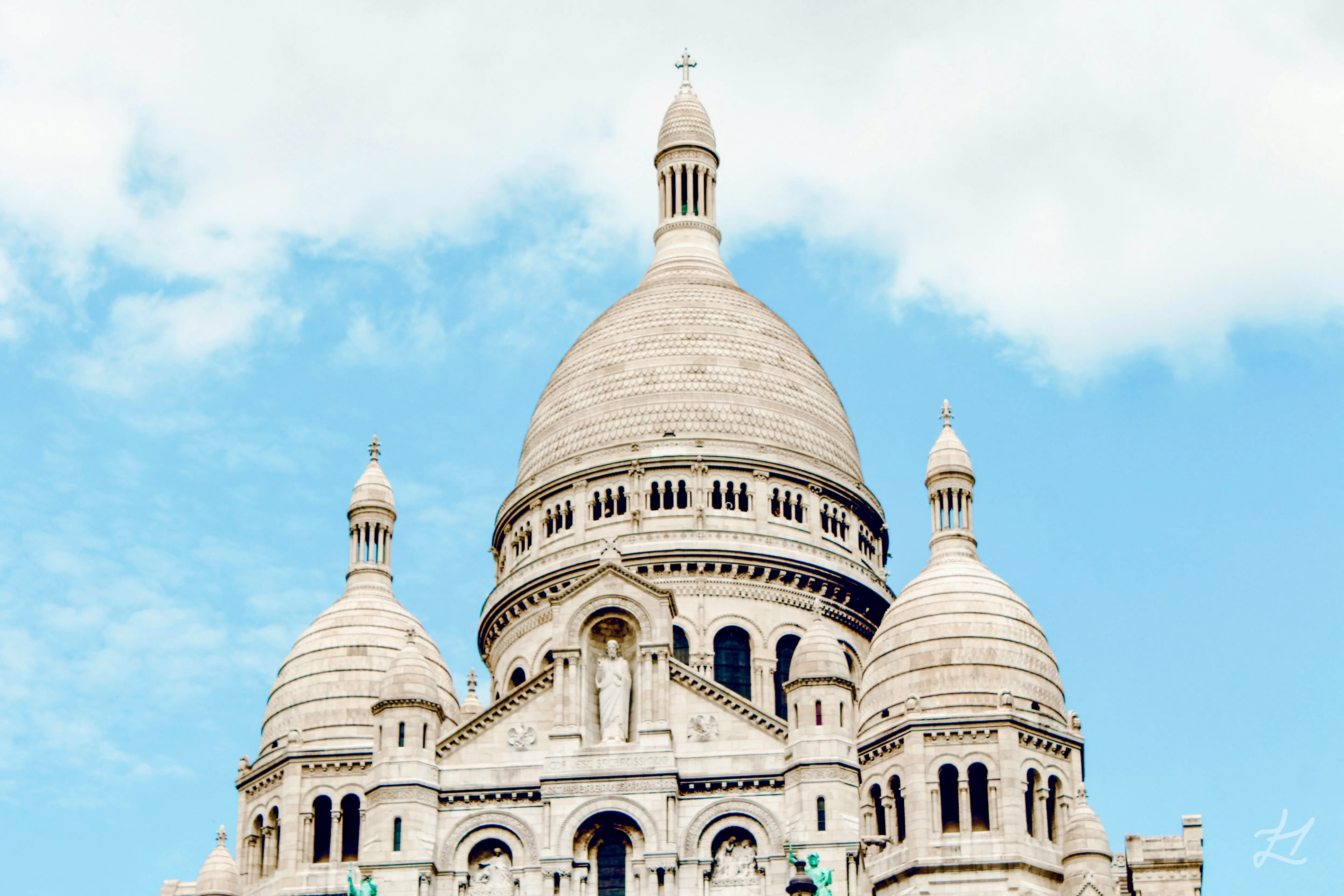
Most visitors spend more time on the steps than inside. That is understandable, but it means missing half the experience.
Three things to read, not just see
- Scale of the main volume.
- Color logic in mosaic surfaces.
- Light direction through upper openings.
Observation grid
| Element | Look for |
|---|---|
| Dome | Geometry and vertical pull |
| Main mosaic | Narrative center and symmetry |
| Side chapels | Quiet detail work |
Quiet method
Stand still 90 seconds.
Lift eyes slowly.
Track one color from foreground to dome.
Slow looking turns the basilica from backdrop into artwork.
Practical flow
- Enter early if possible.
- Keep bags compact for movement.
- Exit to the side before terrace photos.
Final sentence
Inside Sacre-Coeur, the hill's noise dissolves. Let that contrast do its work.
A Longer Walk Through This Story
If you read this on the metro, it can feel like an itinerary. On the hill, it feels different: footsteps, changing light, snippets of conversation, and sudden openings in the skyline. Montmartre is rarely linear. Even when you follow a plan, the neighborhood keeps rewriting the rhythm.
Scene You Can Picture
A corner cafe starts stacking chairs. A delivery van pauses on a narrow lane. Someone sketches from a folding stool while church bells fold into street noise. You keep walking, and the same route shifts from landmark to memory.
The secret is not to see everything. It is to notice one moment deeply enough that it becomes yours.
Make This Post Actionable
- Choose one anchor stop from this guide.
- Add one spontaneous detour street.
- Leave 20 minutes unplanned at the end.
- Write down one sensory detail before you leave the area.
Journal Prompt (2 Minutes)
- What did Montmartre look like from far away?
- What did it feel like up close?
- Which detail will you still remember next month?
Narrative Chapter: Learning to Look Up Slowly
Interior spaces are often consumed too quickly. Here, looking up slowly changes the experience. The dome is not only an architectural feature; it is a pacing device. Your breathing slows, neck tilts, conversation drops, and the visual field reorganizes from horizontal to vertical.
The mosaic logic becomes clearer when you stop hunting for a single focal point. Let your eyes move from edge to center and back. Repetition, symmetry, and color temperature begin to read like a visual sentence.
Three-Minute Viewing Drill
- Minute 1: scale and structure.
- Minute 2: color and iconography.
- Minute 3: light movement and emotional effect.
Depth appears when speed disappears.
Sobre o autor

Paris Neighborhood Guide
Este guia foi criado para viajantes que querem entender Montmartre como um bairro vivido, e nao apenas como cenario. O objetivo e simples: escolhas mais claras, planeamento mais inteligente e uma experiencia no terreno muito mais rica.
Tags
Comments (0)
Loading comments...