Sacre-Coeur Guide - History, Views, and Visitor Tips
Discover the historical layers of Sacre-Coeur and plan a meaningful visit with practical timing and route advice.
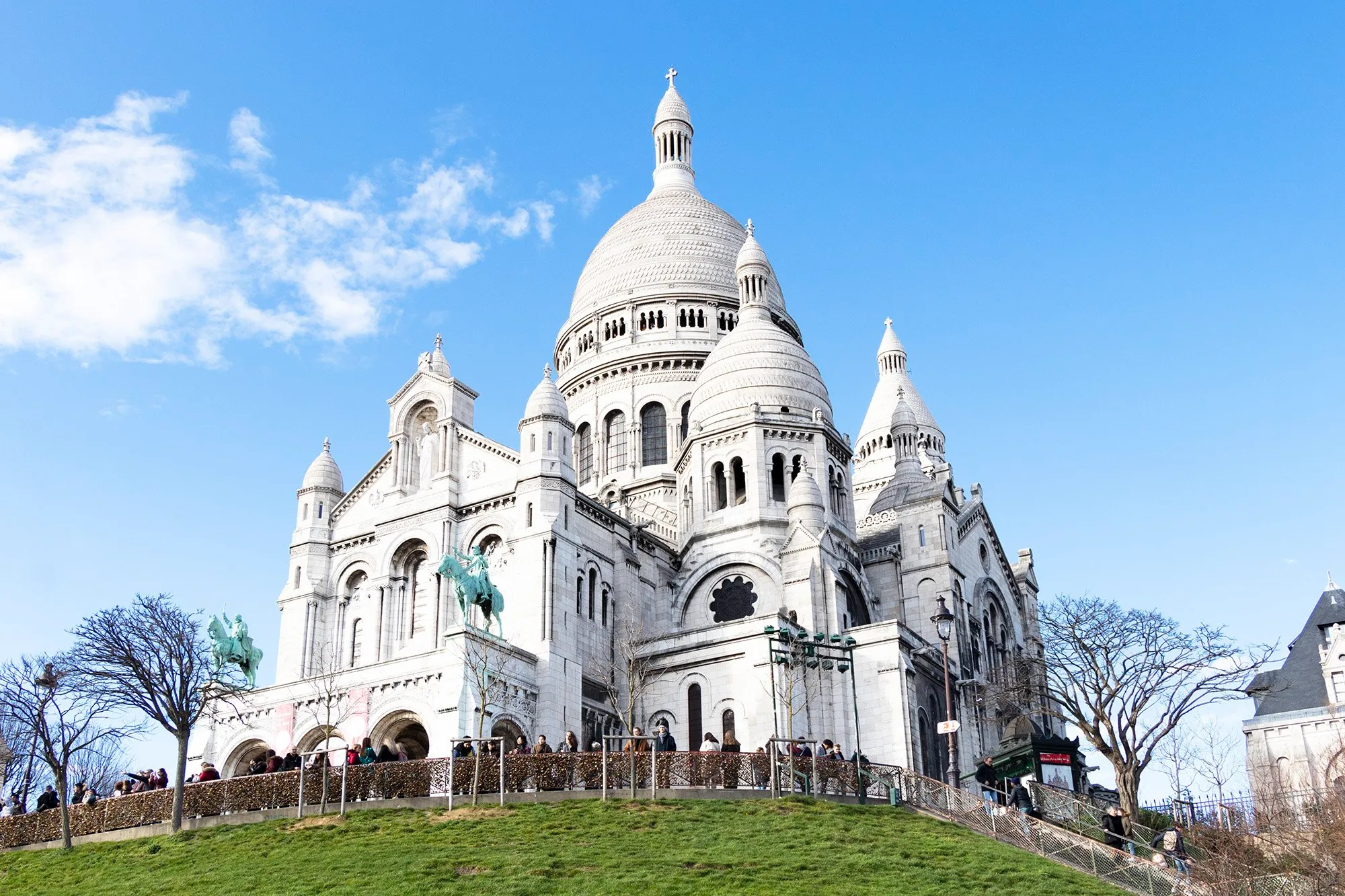
Sacre-Coeur is visible from far away, but understanding it requires stepping close, slowing down, and reading the hill around it.
The hill before the basilica
Before the white domes defined the skyline, Montmartre was a village edge: windmills, vineyards, workshops, and difficult winters. The basilica did not erase that memory; it sits on top of it.
What to notice on arrival
- The bright stone that seems to glow after rain.
- The way the forecourt opens toward Paris like a stage.
- The contrast between solemn interior and lively exterior steps.
A useful mindset: this is both a religious site and a city lookout. Treat both dimensions with respect.
Interior etiquette and flow
- Enter quietly.
- Keep voice low, even when crowded.
- Avoid blocking side aisles for photos.
- Exit slowly and reframe your view outside.
Reading the skyline
From the terrace, the city looks almost flat until landmarks emerge. Try this sequence:
- First minute: identify only river direction.
- Second minute: pick three landmarks.
- Third minute: watch cloud movement and roof color shifts.
Common mistakes
- Rushing in midday peak and leaving frustrated.
- Visiting only stairs and never entering the basilica.
- Ignoring side streets where the hill becomes quieter.
Mini timeline
| Period | Montmartre mood |
|---|---|
| Village era | Rural edge of Paris |
| Bohemian rise | Artists, ateliers, music |
| Modern tourism | Global symbol and neighborhood life |
Closing thought
The best Sacre-Coeur visit combines stillness and movement: five calm minutes inside, then one long walk down through lived-in streets.
A Longer Walk Through This Story
If you read this on the metro, it can feel like an itinerary. On the hill, it feels different: footsteps, changing light, snippets of conversation, and sudden openings in the skyline. Montmartre is rarely linear. Even when you follow a plan, the neighborhood keeps rewriting the rhythm.
Scene You Can Picture
A corner cafe starts stacking chairs. A delivery van pauses on a narrow lane. Someone sketches from a folding stool while church bells fold into street noise. You keep walking, and the same route shifts from landmark to memory.
The secret is not to see everything. It is to notice one moment deeply enough that it becomes yours.
Make This Post Actionable
- Choose one anchor stop from this guide.
- Add one spontaneous detour street.
- Leave 20 minutes unplanned at the end.
- Write down one sensory detail before you leave the area.
Journal Prompt (2 Minutes)
- What did Montmartre look like from far away?
- What did it feel like up close?
- Which detail will you still remember next month?
Narrative Chapter: Stone, Silence, and Distance
Approach Sacre-Coeur twice in your mind: first as silhouette, then as interior space. From far away it reads like a symbol. Up close it becomes texture, light, and sound management: footsteps, murmured voices, changing echoes. The hill teaches scale; the basilica teaches stillness.
A useful way to experience the site is to divide your visit into three tempos. Exterior approach at walking tempo. Interior observation at slow tempo. Terrace view at reflective tempo. Most people rush the second one, and that is where meaning usually lives.
How to Read the Emotional Geography
- Forecourt: collective energy, cameras, movement.
- Nave: contained rhythm, vertical gaze, quiet recalibration.
- Exit lanes: return to ordinary life and neighborhood texture.
Reflection Prompt
What changed more during your visit, the building or your pace?
About the Author

Paris Neighborhood Guide
This guide was created for travelers who want to understand Montmartre as a lived neighborhood, not just a scenic backdrop. The goal is simple: clearer choices, smarter planning, and a richer on-the-ground experience.
Tags
Comments (0)
Loading comments...