Montmartre Guided Walking Tour - Route, Stops, and Tips
See how a classic Montmartre guided walk unfolds and choose a tour that balances storytelling, pacing, and authentic neighborhood context.
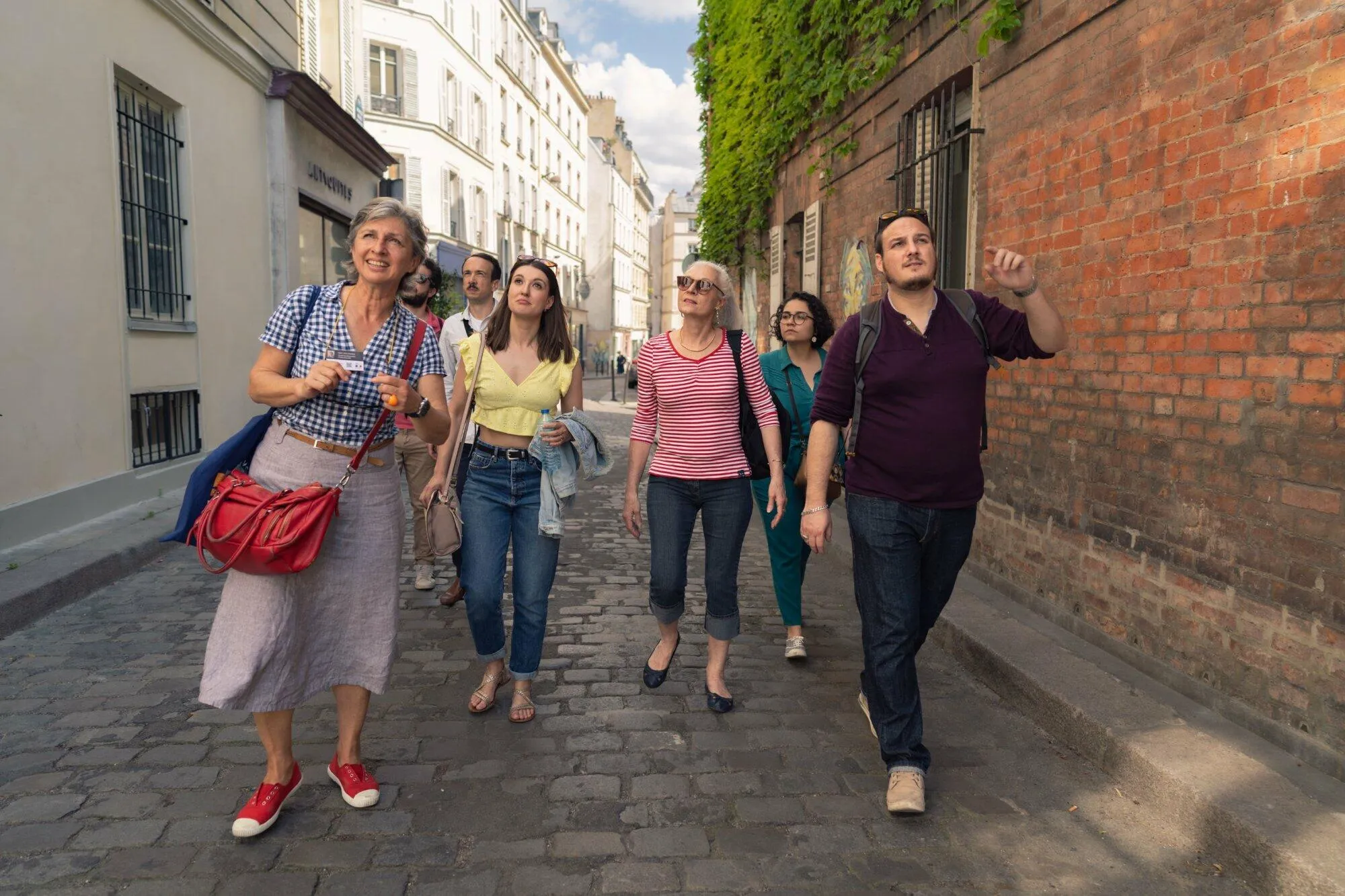
Not all guided tours are equal. The best ones feel like a conversation with a sharp local friend, not a loud history feed.
Typical loop (2 to 2.5 hours)
| Stop | Approx time | Why it matters |
|---|---|---|
| Abbesses | 15 min | Intro to village roots |
| Rue Lepic | 20 min | Everyday life + cinema links |
| Place du Tertre | 25 min | Artists and mythology |
| Sacre-Coeur exterior | 25 min | History and city reading |
| Hidden lane finale | 20 min | Quiet contrast |
What great guides do differently
- They name the street before telling the story.
- They connect one era to another, not isolated anecdotes.
- They leave space for questions.
Green flag: the guide can adjust route instantly for crowd pressure.
Questions to ask before booking
- Group size cap?
- Headsets included?
- Uphill intensity level?
- Food or cafe pause included?
A narrative moment you might hear
"Here the painters came for cheap rent. Now people come for expensive memories. The trick is to find one corner where rent, history, and imagination still overlap."
Self-check after the tour
- Did you learn names, not just legends?
- Did you walk at neighborhood speed?
- Did the guide include both famous and quiet stops?
Final tip
Book morning tours for cleaner light and better listening conditions. Afternoon groups get louder, and Montmartre rewards details.
A Longer Walk Through This Story
If you read this on the metro, it can feel like an itinerary. On the hill, it feels different: footsteps, changing light, snippets of conversation, and sudden openings in the skyline. Montmartre is rarely linear. Even when you follow a plan, the neighborhood keeps rewriting the rhythm.
Scene You Can Picture
A corner cafe starts stacking chairs. A delivery van pauses on a narrow lane. Someone sketches from a folding stool while church bells fold into street noise. You keep walking, and the same route shifts from landmark to memory.
The secret is not to see everything. It is to notice one moment deeply enough that it becomes yours.
Make This Post Actionable
- Choose one anchor stop from this guide.
- Add one spontaneous detour street.
- Leave 20 minutes unplanned at the end.
- Write down one sensory detail before you leave the area.
Journal Prompt (2 Minutes)
- What did Montmartre look like from far away?
- What did it feel like up close?
- Which detail will you still remember next month?
Narrative Chapter: Following a Voice Through the Hill
A strong guide does more than list facts. They modulate attention. One minute they are translating architecture, next they are reading social history from a doorway, then they stop speaking entirely so the group can hear the street itself. That silence is part of the craft.
On good tours, the route feels inevitable in retrospect, even though it is highly adaptive in practice. A guide might reroute one block to avoid a bottleneck and suddenly the group gets a better angle, calmer audio, and a more coherent story beat.
Signs You Are on a High-Quality Walk
- Transitions are smooth between eras and places.
- Questions are answered with context, not trivia.
- The group leaves with place names, not only anecdotes.
After-Tour Ritual
Repeat one segment alone at your own pace. That is where guided context becomes personal memory.
Σχετικά με τον συγγραφέα

Paris Neighborhood Guide
This guide was created for travelers who want to understand Montmartre as a lived neighborhood, not just a scenic backdrop. The goal is simple: clearer choices, smarter planning, and a richer on-the-ground experience.
Tags
Comments (0)
Loading comments...